한뉴픽
Never changing through the 80 years : the sky, wind, stars, and poems (No. 175 of 2025)

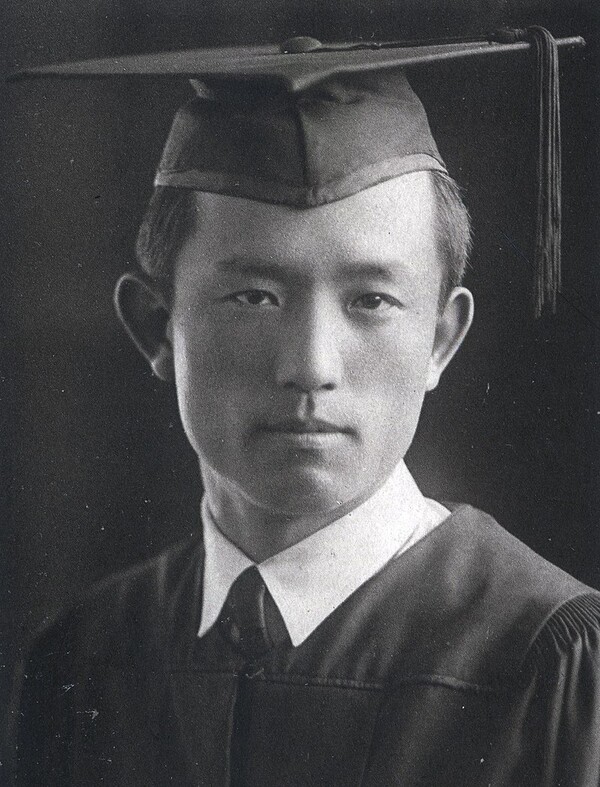
On February 16, 2025, it marked 80 years since the death of Yun Dong-ju, an independence activist who had fought during the Japanese occupation. He is regarded as one of the most beloved poets among Koreans. He was arrested in July, 1943, on charges of violating the Peace Preservation Law and sentenced to two years in prison, where he was incarcerated at Fukuoka Prison in Kyushu, Japan. After spending the last year and seven months of his life in the prison, he passed away on February 16, 1945, in a cramped cell from a foreign land. He was only 27 years old at that time, just six months away from the restoration of independence he had longed for. Nevertheless, the poems he left behind during his brief life continue to be cherished, solidifying his legacy as a national poet of South Korea.
“Until the day I die, I hope to look up at the sky without a single shame. Even in the wind that stirs the leaves, I have suffered.” Among many works in Yun's poetry collection “Sky, Wind, Stars and Poem,” the most renowned piece is likely to be “Prologue”. Interestingly, this poem was originally untitled; it was written as a greeting at the beginning of the collection. Later, it was assigned the title to indicate that it served as the introduction in the collection. As the title suggests, this poem conveys the word he wished to say and determination of the poet, Yun Dong-ju.
In all the poems of Yun, the term 'shame' is notably prevalent. This looks evident in his earlier pieces;“Prologue”, “The Night Counting Stars”, “A Confession”, “Easily Written Poem”, “Lovely Memories”, “Another First Morn”, “The Road”, and “Cosmos”. The word shame is defined as ‘the feeling of being unable to face others due to wrongdoing or a guilty conscience, or feeling deeply unworthy.’ So, what was it that he felt ashamed of, being recognized as a national poet for his unwavering fight during one of the darkest periods in Korean history? What did he aspire to take pride in, wishing to live without shame until the end of his days?
He was born on December 30, 1917, into an affluent family in Bukkgando. He attended Myeongdong Elementary School, Soongsil Middle School, and Gwangmyeong Middle School before enrolling at Yonhi College in 1938. During this period, he experienced joyful moments and composed a lot of renowned poems. One of his most famous works, "The Night Counting Stars," was written in 1941 at his fourth year. This poem captured his feelings for his mother in North Gando as he gazed at the stars in the night sky after leaving his hometown, evoking a sense of pure emotions that reflect his happier days. In the poem, the speaker gazes at the autumn sky, who counts the stars without a care. He names each star after something significant and engraves them in his heart: a star for memory, one for love, one for loneliness, one for longing, one for poetry, and one for mother. Yet, these beloved things make us feel distant, much like the stars, always out of reach. Suddenly, he wrote their name on a hill but quickly feel embarrassed and cover it with dirt. He was ashamed of not shining like the stars they admire and reflect on their past experiences. Finally, he held onto the hope that, when winter ended and spring arrived, the hill with their names would be vibrant with grass. Yun felt a deep sense of shame for himself, who sank into silence during the harsh winter of Japanese colonial rule. Nevertheless, he remained hopeful that the suffering would be over and spring would come one day.
On January 24, 1942, Yun composed a poem of “A Confession.” In the poem, the speaker gazes into a copper mirror that is marred by blue corrosion, reflecting a dirty image of his own face. Embarrassed by this appearance, the speaker cleans the mirror with his hand, expressing remorse of the 24 years and 1 month. Just five days after writing this poem “A Confession,” he sought to change his name into Japanese so as to study in Japan after graduating from Yonhi College. Changssigaemyeong was part of a policy which pressured Koreans to adopt Japanese names and family structures, and was enforcing from 1940 during the latter part of Japanese colonial rule. The tarnished copper mirror in "A Confession" represents the dire state of Korea at that time. Under these circumstances, he was likely to feel a deep sense of shame for requesting a Changssigaemyeong and may wish to conceal himself behind the mirror's corrosion. Even so, he confronted his reflection while cleaning away the tarnish and expressed his remorse. Repentance signifies "to feel shame and regret." He felt a profound sense of shame about his decision. Yet, he did not shy away from the realities of his era. Rather than justifying his action by claiming that he had no alternatives, he contemplated his history, aware of culminate in a humiliating admission later on, and composed "The Confession" while committing himself to serve his nation and the people. The poet, who hoped to have no regrets, was not swayed even by the wind rustling the leaves. Those who loved all that was dying walked the path given to him and became a proud page in history.
Most people navigate their lives by making choices at every moment, who caught between ideals and realities. They probably have at least one childhood dream. However, the reality often disrupts our aspiration. With the demands of studying, entrance exams, and job pressures, it's easy to abandon our ideals due to the stress and challenges we encounter. This may explain why the image of a poet, who feels embarrassed about not being able to pursue their ideals boldly in a world filled with suffering and oppression, resonates with a lot of things. The introspective nature can be found in his poetry and the life he ultimately chosen, are the reasons that we continue to admire him even after 80 years, following the path he laid out for him. Not every decision can be ideal. Sometimes we may feel regret about our choices. In those times, let’s go back to Yun Dong-ju’s poems. It can offer a bit of solace and inspire us to confront ourselves honestly, clearing away the fog.
Finally, appreciating the youth who early forsook everything for the sake of the homeland and dedicating this writing to a poet who had loved the sky, wind, stars, and poems.
Hwang Ho Rim / Reporter
정보관리부서 : 홍보팀
최종 수정일 : 2026-04-06